While all hernias involve an organ pushing through a muscle, the location dictates the risk. For example, Femoral Hernias have a higher risk of getting stuck (strangulation) than Inguinal ones.
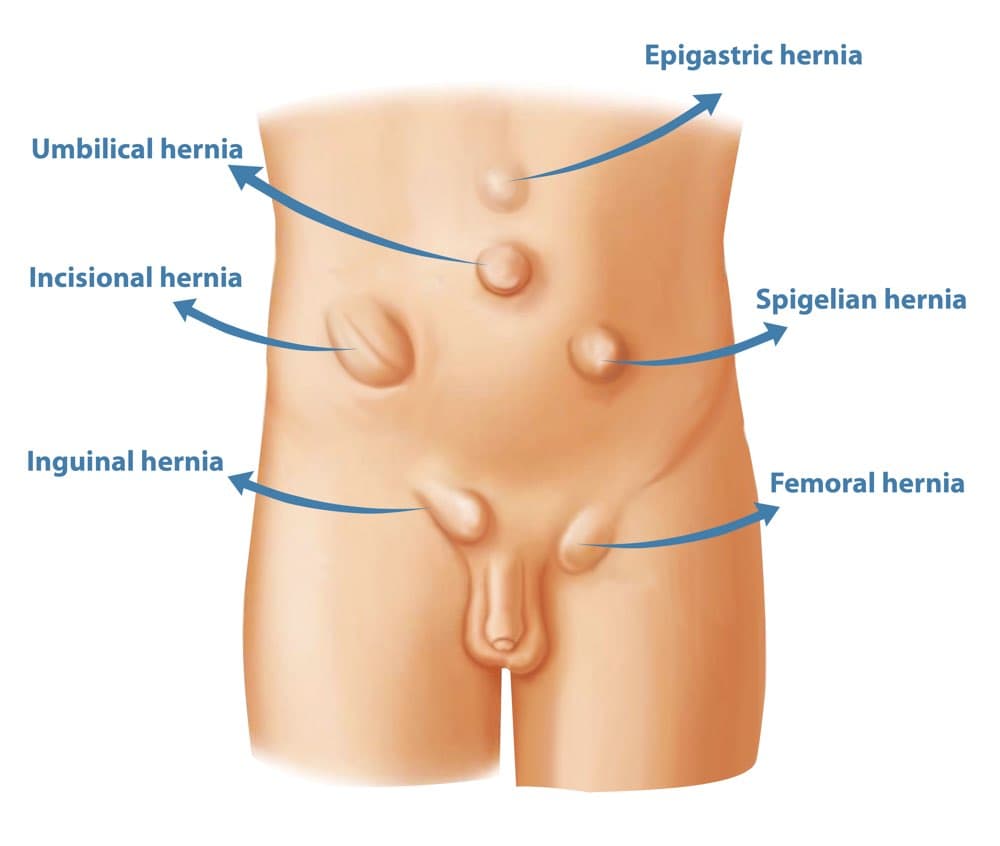
The most common type (70% of cases). Intestine pushes through the inguinal canal in the groin. Common in men due to natural weakness in this area.
Occurs when intestine bulges through the abdominal wall near the navel. Common in newborns, pregnant women, and obese adults.
Develops at the site of a previous surgical cut (incision) that didn't heal completely. It can happen months or even years after surgery.
Appears just below the groin crease (upper thigh). More common in women. Higher risk of strangulation (complications) than inguinal hernias.
Internal hernia where the upper stomach squeezes through the diaphragm into the chest. Causes acid reflux (GERD) rather than a visible bulge.
Occurs between the navel and the chest bone. Usually made of fat tissue pushing through the abdominal wall.
Visual Guide by Dr. Jaya
"Many patients confuse Femoral and Inguinal hernias because they are so close. A physical exam or ultrasound helps us distinguish them."
Dr. Jaya Maheshwari uses a diagram to show exactly where each hernia occurs and explains why Inguinal Hernia is so common in men.
Physical Exam
Cough Impulse Test
USG Abdomen
To see defect size
Don't guess. An accurate diagnosis ensures the mesh is placed correctly.
Book Consultation