
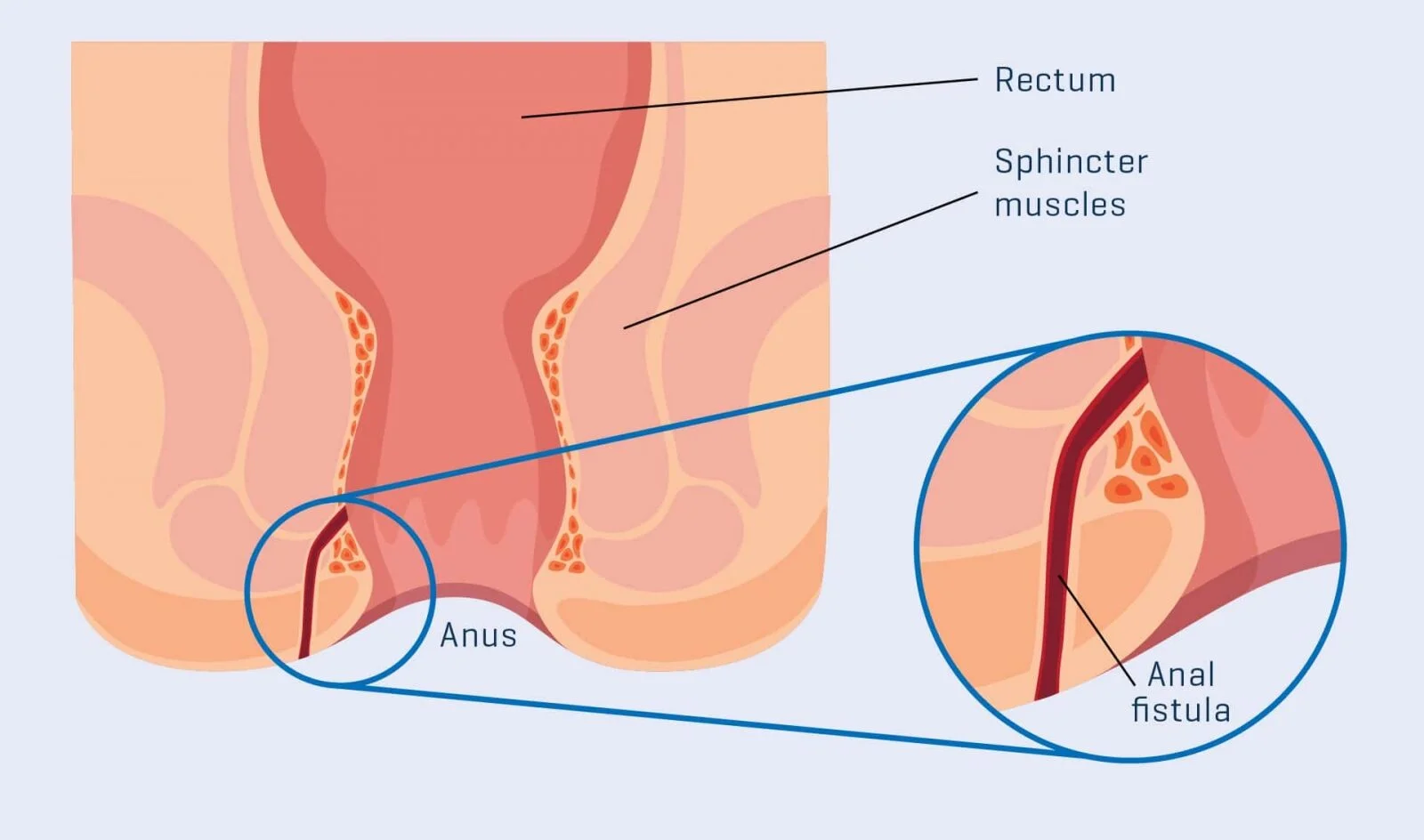
If you're looking for a Fistula specialist in Jaipur for chronic discomfort, swelling, pus discharge, or a recurring abscess, prompt evaluation by a skilled surgeon is crucial. Anal fistula, often referred to as fistula-in-ano, is an abnormal tract or tunnel that connects the anal canal with the skin surrounding the anus. It usually develops after an infection or abscess and can lead to chronic drainage, discomfort, and irritation.
At Jyoti Nursing Home, Dr. Jaya Maheshwari is a specialist in the diagnosis and treatment of fistulas in the anal as well as other anorectal disorders. Treatment depends on the fistula's location, severity, and complexity, to treat the fistula while preserving normal anal sphincter function.
Schedule an appointment for an examination for anal fistula surgery in Jaipur.
The anal fistula (fistula-in-ano) is an abnormal tunnel that is formed between the inner part of the canal in the anal and the skin around the anus. In many instances, it develops following an anal gland that becomes affected and develops the appearance of an abscess. If the abscess is drained, however, the abnormal tract is left; the fistula can develop.
A fistula may be a hollow inside the anal canal as well as an external opening in the skin. Some fistulas are simple, and others could contain multiple branches or an increased portion of the sphincter in the anal. This distinction is crucial in deciding the best treatment.
The signs and symptoms may vary based on the location and extent of the fistula.
If the opening in the anus continues to swell and then the pus drains and pus, it is best to have it evaluated by a certified surgeon or a proctology specialist.
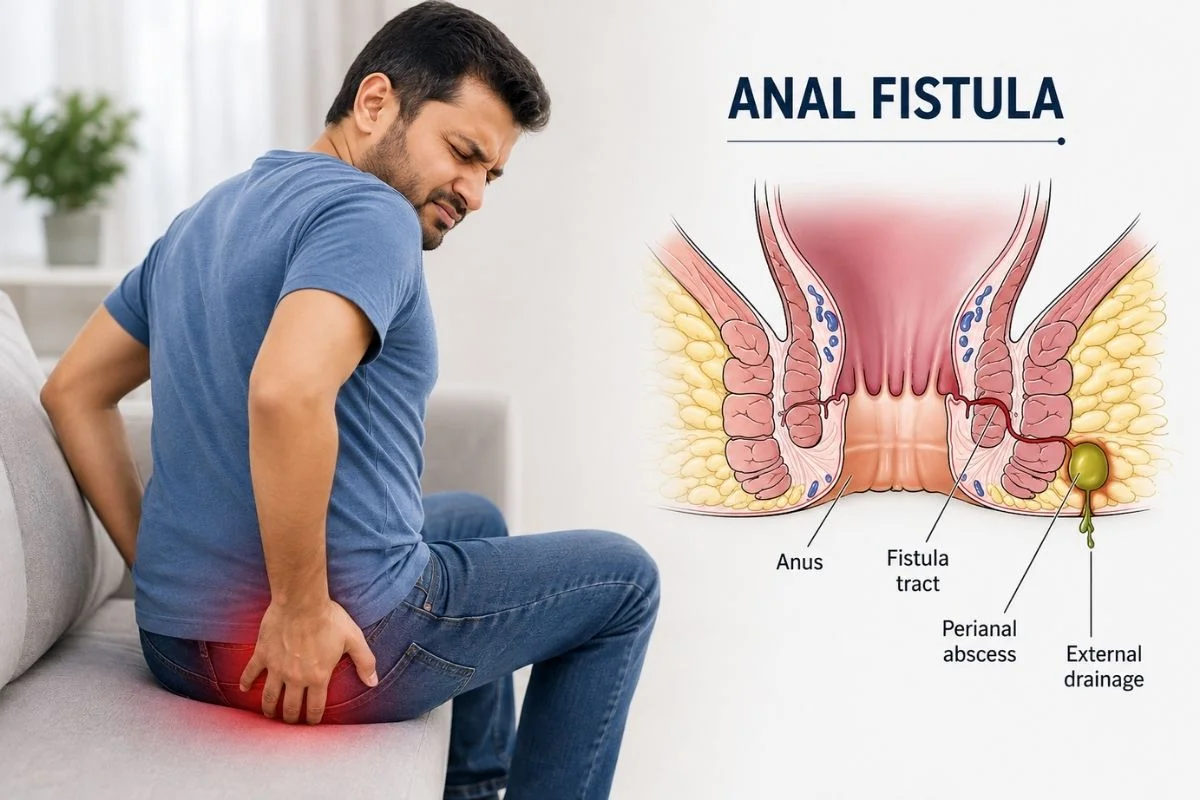
The most typical reason for an fistula anal can be due to inflammation of the gland in the anal that causes and the abscess in the anal. When the abscess is gone, an infected tract may be left behind and eventually develop into a fistula.
Other causes or conditions are:
The underlying cause must be identified during a clinical examination since the treatment can differ based on the condition of the patient.
| Feature | Anal Fistula | Anal Fissure |
|---|---|---|
| What is it? | An abnormal tunnel connecting the anal canal to the skin around the anus | A small tear or crack in the lining of the anus |
| Common cause | Often develops after an anal abscess or infection | Often caused by hard stools, constipation, or straining during bowel movements |
| Main symptoms | Pus discharge, swelling, recurrent abscess, pain, and an opening near the anus | Sharp or burning pain during/after bowel movements and bright-red bleeding |
| Discharge | Pus or foul-smelling discharge may occur | Usually no pus discharge |
| External opening | May have a small opening on the skin near the anus | Usually no external opening |
| Recurrence | May repeatedly swell and drain if the fistula tract remains | Can recur, especially if constipation or other underlying causes persist |
| Diagnosis | Clinical examination; MRI or other imaging may be recommended for complex or recurrent fistulas | Usually diagnosed through medical history and physical examination |
| Treatment | Often requires a procedure or surgery such as fistulotomy, seton placement, LIFT, or selected laser techniques | Often initially managed with fiber, fluids, stool-softening measures, topical medicines, and lifestyle changes |
| Specialist | Fistula Specialist, Proctologist, Colorectal Surgeon, or experienced General Surgeon | Proctologist, Colorectal Surgeon, or experienced General Surgeon |
| Can it be confused with the other? | Yes. Both can cause anal pain and discomfort | Yes. Both can cause anal pain and discomfort |
In simple terms: An anal fissure is a tear in the anal lining, while an anal fistula is an abnormal tunnel between the anal canal and nearby skin. Persistent pus discharge or recurrent swelling is more suggestive of a fistula and should be evaluated by a specialist.
The diagnosis usually starts with a thorough medical history as well as physical examination of the anal and perianal regions.
Based on the signs and severity of the fistula, a surgeon may suggest further tests, for example:
Imaging is especially useful when the fistula is persistent, complicated, complex, difficult to detect clinically, or is associated with other conditions like Crohn's disease. Routine imaging is not required for every simple fistula.
There isn't one treatment that is suitable for every fistula anal. The treatment strategy is based on factors like:
The primary treatment options could comprise:
Fistulotomy involves opening the fistula's tract so it heals inwards and outwards. It is usually considered as a treatment option for certain low or simple fistulas in which the procedure is performed without risk while maintaining sphincter function.
A seton can be utilized in certain complex fistulas to assist in maintaining drainage, controlling the fistula, and reducing the chance of damage to the sphincter. The best method to use is dependent on the particular anatomy of each fistula.
LIFT (Ligation of the Intersphincteric Fistula Trace) is a sphincter-preserving surgical procedure that is used to treat certain fistulas in the anal. Its goal is to fix the fistula tract via the intersphincteric plane, while also limiting the division of the sphincter anal.
FILAC (Fistula-tract Laser Closure) uses laser energy to treat the fistula tract. It can be considered in certain patients, especially in cases where preserving sphincter function is desired. The feasibility of this procedure is determined by the anatomy of the fistula and the evaluation of clinical signs.
If there is an active abscess of the perianal or anal is found the need for prompt drainage is typically needed. Fistulas and abscesses may be related, but they're not the same.
Finding a qualified surgeon to treat fistulas is essential since the tract of a fistula can differ significantly between patients.
At Jyoti Nursing Home, care is centered around:
The aim is not just to close the opening externally but to determine and properly treat the fistula's source, taking into consideration sphincter function as well as the likelihood of repetition.
You should think about a professional test if:
The presence of a recurring abscess or discharge must not be overlooked because a fistula underneath could be present.
During your appointment, the surgeon will first talk about your symptoms, prior surgeries or abscesses, and concomitant medical issues. A physical exam is carried out to identify the site and the possible path that the fistula may take.
If the fistula seems to be complicated or recurrent, imaging like MRI could be recommended to trace the path before treatment. This allows the surgeon to select the best treatment option.
After treatment, follow-up visits are vital to assess the healing process the wound, drainage, and any recurrence.
The duration of fistula surgery depends on the location and complexity of the fistula and the procedure selected. Your surgeon can provide an estimated procedure time after evaluating the fistula.
The cost of fistula treatment in Jaipur depends on factors such as the type and complexity of the fistula, diagnostic tests, treatment procedure and hospital-related charges. A consultation is recommended for an accurate treatment plan and cost estimate.
The required rest period varies depending on the type of fistula surgery and individual recovery. Many patients can gradually resume normal activities as healing progresses, but your surgeon will advise you about activity and wound care.
Return to work depends on the procedure performed, the nature of your job and your recovery. Patients with desk-based work may return sooner than those whose work involves prolonged sitting, physical activity or heavy lifting.
Sitting may be uncomfortable during the initial healing period. The duration of discomfort depends on the procedure and individual recovery. Your surgeon can recommend suitable sitting positions and wound-care measures during recovery.
A fibre-rich diet, adequate fluids and foods that help maintain soft bowel movements are generally encouraged after anorectal surgery. Your doctor may recommend specific dietary changes depending on your procedure and individual condition.
Following your surgeon's post-operative instructions, maintaining good bowel habits, preventing constipation and attending scheduled follow-ups can support recovery. If you notice recurring pain, swelling or discharge, seek medical evaluation promptly.
Look for a surgeon with experience in treating anal fistula and other anorectal conditions. During consultation, ask about the fistula's complexity, available treatment options, expected recovery and how the treatment approach considers anal sphincter function.